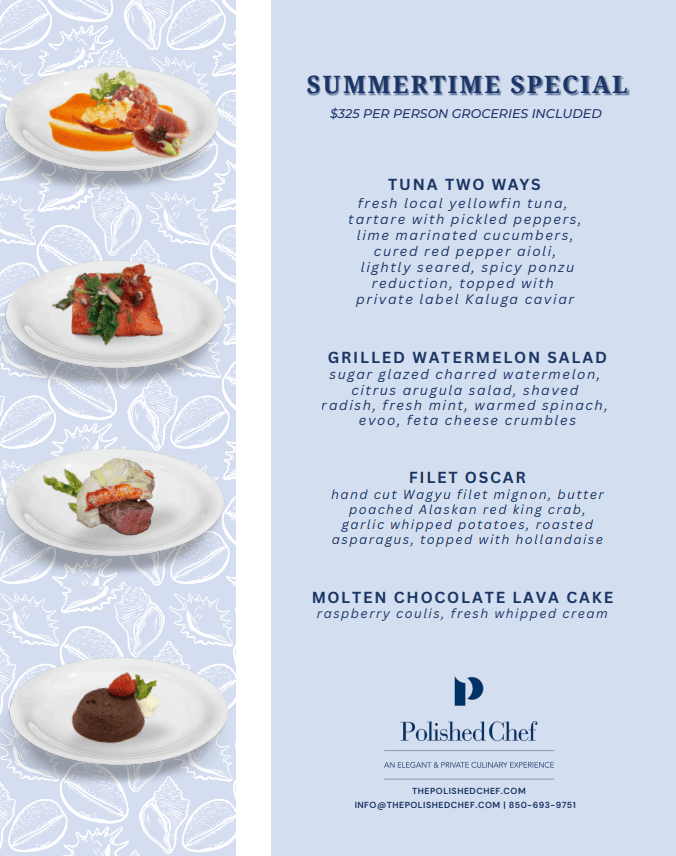

A custom private chef menu should feel like it belongs to your table. It should reflect the occasion, the season, the guest list, dietary needs, service style, kitchen setting, and the kind of evening you want to host.
The best private chef menus do not feel like fixed packages with a few substitutions. They feel designed. Every course has a reason. The pacing fits the group. The ingredients fit the season and location. Dietary needs are handled before guests sit down. The host feels confident because the menu has already been thought through.
This guide explains how The Polished Chef approaches private chef menu design for homes, 30A vacation rentals, beach houses, birthdays, anniversaries, corporate dinners, brunches, and wedding-week meals.
Step 1: Start with the Occasion
Menu design begins with the reason for gathering. The occasion determines tone.
A birthday dinner may call for a celebratory first course and a dessert moment. An anniversary may need a quieter plated menu. A corporate dinner may need precise pacing and broad guest appeal. A 30A beach house dinner may feel better with seafood, family-style service, and a relaxed coastal rhythm.
Before discussing dishes, answer:
- What is being celebrated?
- How formal should the meal feel?
- Should the dinner be the main event?
- How long should guests sit?
- Will there be children?
- Are there speeches, gifts, photos, or a sunset plan?
- Should the menu feel coastal, seasonal, classic, or adventurous?
Those answers shape the menu more than any single ingredient.
Step 2: Understand the Guests
A private chef menu is only successful if it fits the people eating it. Guest count, preferences, restrictions, age range, and comfort level all matter.
The Polished Chef planning process should account for:
- Favorite ingredients
- Avoided ingredients
- Allergies and sensitivities
- Gluten-free needs
- Vegan-friendly or vegetarian preferences
- Ingredient-conscious planning
- Child-friendly needs
- Spice preferences
- Portion expectations
For mixed groups, the goal is to create a menu that feels cohesive. A guest with a dietary need should not feel like they received a separate afterthought.
Step 3: Choose the Service Style
Service style changes the menu. A plated dinner, family-style dinner, brunch, and tasting menu each require different pacing.
| Service Style | Best Fit | Menu Considerations |
|---|---|---|
| Plated dinner | Anniversaries, birthdays, client dinners | Clear course progression, refined plating, tighter timing. |
| Family-style | Vacation homes, large families, relaxed groups | Shared dishes, generous portions, easier conversation. |
| Brunch | Wedding weekends, beach mornings, birthdays | Fresh, bright dishes with flexible pacing. |
| Tasting menu | Smaller culinary-focused groups | More courses, more precise pacing, smaller portions. |
| Seafood tower or caviar tasting | Celebrations and coastal dinners | Strong opening moment, premium sourcing, pairing plan. |
Read more in the private chef dinner styles guide.
Step 4: Build Around Seasonal Ingredients
Seasonal private chef menus often feel more alive. On 30A, that may mean seafood-forward courses, bright produce, citrus, herbs, composed salads, and lighter coastal dishes. In city markets, menus may lean toward premium proteins, local produce, refined sauces, or event-specific courses.
Seasonality should not be a vague word. It should influence what appears on the plate.
Good seasonal menu design considers:
- What is fresh and reliable
- What travels well
- What can be prepared in the kitchen available
- What fits the weather
- What feels right for the time of day
- What supports dietary needs
Step 5: Add Pairings Thoughtfully
Pairings should support the food, not distract from it. Depending on the event, this may include crafted refreshments, fresh juices, botanical drinks, tea service, zero-proof pairings, sparkling non-intoxicating selections, or sommelier-guided options when requested.
For values-aware or family-friendly gatherings, pairing language and menu planning should remain respectful and ingredient-conscious.
Sample Menu Direction: 30A Beach House Dinner
A 30A beach house menu might look like:
- Bright seasonal starter with coastal vegetables
- Seafood course with citrus, herbs, and a composed sauce
- Family-style or plated main course built around premium seafood or protein
- Seasonal sides designed for sharing
- Polished dessert that travels well and fits the weather
- Fresh juices, tea service, or zero-proof pairing options
The exact menu should be tailored to the group, but the direction fits the setting: coastal, refined, and easy for guests to enjoy.
Sample Menu Direction: Birthday Dinner
A birthday private chef menu might include:
- A celebratory starter
- Guest-of-honor favorite ingredient
- Plated main course or family-style centerpiece
- Dietary-aware options for the group
- Dessert moment designed around the celebration
- Crafted refreshments or tea service
The birthday menu should feel personal, not just premium.
Sample Menu Direction: Corporate Private Dinner
A corporate menu should be polished and broadly appealing. It should avoid messy service, overly complicated dishes, or pacing that interrupts conversation.
Strong corporate menu planning considers:
- Guest comfort
- Dietary collection before the event
- Efficient plating
- Clean presentation
- Reliable timing
- A finish that does not drag
Step 6: Confirm Kitchen Logistics
A beautiful menu still has to work in the kitchen. A private home, 30A rental, beach house, condo, yacht, or event venue may each have different equipment.
Before finalizing a menu, confirm:
- Oven and stovetop access
- Refrigeration
- Counter space
- Serving pieces
- Dishwashing access
- Parking or loading
- Indoor/outdoor service
- Weather backup plan
Menu design should respect the setting.
Step 7: Make Dietary Needs Feel Integrated
Dietary-aware menu planning should happen early. Gluten-free, dairy-free, vegan-friendly, vegetarian, ingredient-conscious, allergy-aware, and other needs can often be handled elegantly when the chef knows in advance.
Read more about dietary-aware private chef and ingredient-conscious private chef planning.
FAQ: Custom Private Chef Menus
Can I request specific dishes?
Yes. Share favorite ingredients, dishes, and styles. The chef can use those preferences to shape a menu that works for the event.
Is the menu fixed or fully custom?
The Polished Chef builds menus around the occasion, guest preferences, dietary needs, and service style. Sample menus can guide the conversation, but the final menu should fit your table.
Can the menu be ingredient-conscious?
Yes. Share your sourcing preferences, ingredient boundaries, and expectations during planning so the menu can be designed respectfully.
Can one menu handle multiple dietary needs?
Often, yes. The key is to discuss needs early so the menu can be cohesive instead of patched together.
How soon is the menu finalized?
Timing depends on the event date, guest count, and complexity. Final details are usually confirmed after preferences, dietary needs, and logistics are clear.
Ready to Design Your Menu?
A custom private chef menu should make the host feel understood and the guests feel considered. The Polished Chef can help design a menu around your occasion, location, and table.